
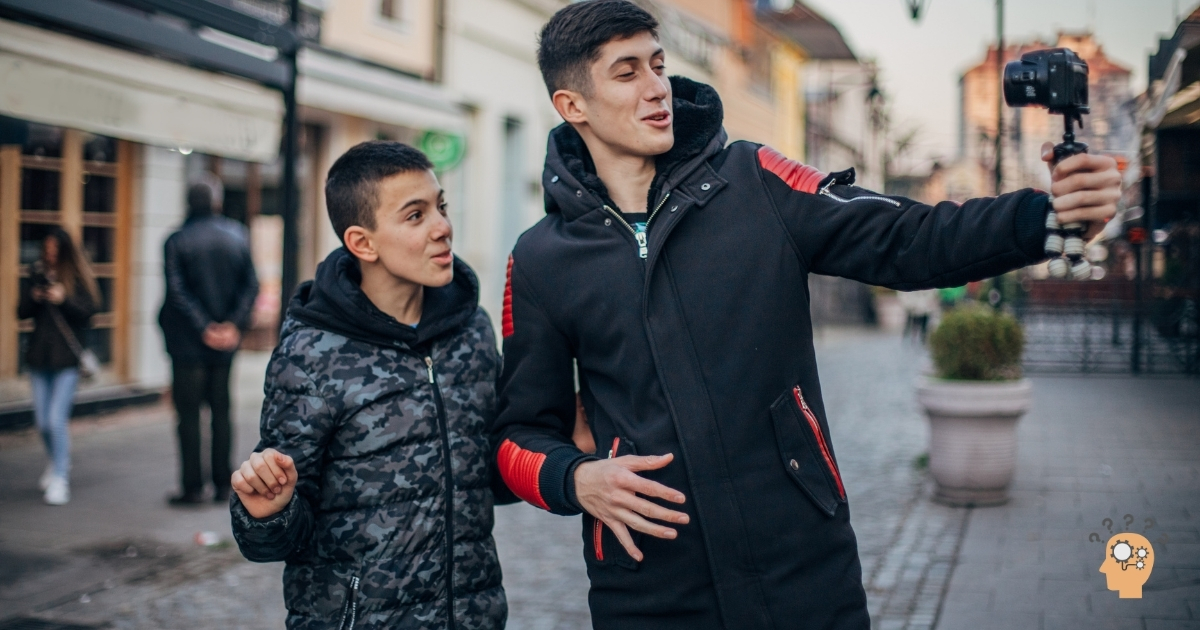
At some point, most of us have had this uncomfortable thought.
Am I actually living my life… or am I performing it?
Not in a dramatic, theatrical way. More subtly. The way you choose your words more carefully when someone is watching. The way your personality shifts slightly depending on who you are with. The way you think about how something will look before you think about how it feels.
We live in a time where everything can be seen. Social media profiles, curated photos, productivity updates, relationship milestones. Even our struggles are often packaged in a way that makes them acceptable to share. It becomes hard to tell where real life ends and the performance begins.
The strange thing is that performance does not always feel fake. It often feels normal.
From a young age, we learn that approval matters. Teachers reward certain behaviour. Friends respond better to certain traits. Employers value particular qualities. Slowly, we start adjusting. Not in a manipulative way, but in a survival way. We discover which version of ourselves gets accepted, praised, loved, or at least tolerated.
Over time, that adjusted version can become the default.
You might choose a career that sounds impressive more than one that feels meaningful. You might stay quiet about opinions that feel too inconvenient. You might present a calm, composed version of yourself when inside you are confused or overwhelmed. You might even pursue goals that look successful on paper but feel strangely empty when achieved.
The performance is not always for strangers. Sometimes it is for family. Sometimes for a partner. Sometimes for friends. And often, it is for an invisible audience in our own minds. A mental crowd judging whether we are successful enough, attractive enough, interesting enough.
The question is not whether we perform at all. We all do. Some level of social performance is part of being human. Society would not function if everyone expressed every thought unfiltered. The real question is whether the performance has replaced the person.
Authenticity is not about being brutally honest at all times. It is not about rejecting social norms or living in constant rebellion. It is about alignment. It is about whether your outer life reflects your inner values.
If your daily actions contradict what you truly believe, something starts to feel off. That quiet dissatisfaction, that subtle restlessness, that sense that you are living slightly outside your own skin. Many people describe it as feeling lost, even when everything looks fine from the outside.
Social media intensifies this tension. When you post, you are aware of being seen. When you choose not to post something, that is also a decision shaped by how it might be perceived. The line between documenting your life and designing your image becomes thin.
You start asking yourself questions like, would I still do this if nobody knew about it? Would I still chase this goal if I could never tell anyone I achieved it?
Those questions are uncomfortable because they strip away applause. They reveal motivation. And sometimes the answer is surprising.
Living authentically does not mean quitting your job, deleting every app, or cutting off everyone who misunderstands you. It starts much smaller than that.
It starts with noticing.
Notice when you say yes but want to say no. Notice when you exaggerate parts of yourself to seem more impressive. Notice when you hide interests because they feel uncool. Notice when you pursue something mainly because it will look good in conversation.
Awareness alone changes behaviour over time.
Then comes a quieter kind of courage. The courage to express a slightly unpopular opinion. The courage to admit you do not know something. The courage to choose a path that makes sense to you even if it does not fit the standard timeline.
Authenticity is rarely dramatic. It is often subtle. It looks like setting boundaries without overexplaining. It looks like choosing rest when productivity would earn more praise. It looks like pursuing meaning over status, even when status is louder.
It also means accepting that not everyone will understand you. When you stop performing, you lose some approval. That can feel scary. But you also gain something else. You gain coherence. You feel less fragmented. Your inner and outer life begin to align.
There is a kind of quiet relief in that alignment. You no longer have to remember which version of yourself you presented to which audience. You can relax into being consistent.
The irony is that authenticity often attracts deeper connection. When you drop the polished performance, people who resonate with the real version of you start to show up. The connections may be fewer, but they are stronger.
So are we living authentically or just performing for an audience?
The honest answer is probably both.
We perform in small ways every day. But we also have the ability to return to ourselves. To check in. To recalibrate. To ask whether the life we are building would still feel meaningful if nobody clapped for it.
In a world that constantly watches, choosing authenticity is a quiet act of rebellion.
And maybe the most important audience is not the crowd at all. It is the version of you that has to live with your choices long after the applause fades.


